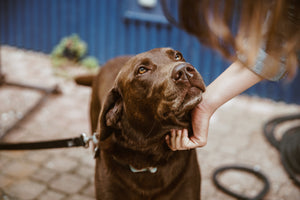
Your dog is talking to you all the time, just not with words. A relaxed, happy dog holds its tail in a loose wag, keeps its ears in a natural position, and carries its whole body soft and wiggly. A stressed or fearful dog does the opposite: tail tucked low, ears pinned back, body stiff and hunched, maybe panting or yawning for no clear reason. Learning to read seven key signals, tail, ears, eyes, mouth, posture, stress cues, and raised hackles, helps you catch discomfort early, avoid situations that overwhelm your dog, and build more trust between you.
In this article
- Why understanding dog body language matters
- 1. What does tail position really mean?
- 2. How do ears signal a dog's mood?
- 3. What do a dog's eyes tell you?
- 4. What does mouth and lip position show?
- 5. How does body posture reveal stress or confidence?
- 6. What are calming signals and stress signs?
- 7. What do raised hackles mean?
- FAQ

Why Understanding Dog Body Language Matters
Most dogs give plenty of warning before they growl or snap, but the early signals, a stiff body, a tucked tail, a quick lick of the lips, are subtle and easy to miss. In Singapore, where dogs share tight HDB corridors, crowded void decks, and busy dog cafes, reading these cues early helps you prevent an uncomfortable encounter, and notice when your dog is simply too hot or overstimulated, before things escalate.
1. What Does Tail Position Really Mean?
A wagging tail does not always mean a happy dog. What matters is the height, speed, and shape of the wag. A loose, wide wag held level with the spine signals relaxed contentment. A high, stiff, fast wag often means high arousal or alertness, not necessarily friendliness. A tail tucked tightly against the belly is one of the clearest signs of fear.
2. How Do Ears Signal a Dog's Mood?
Ears held in their natural position, upright for prick-eared breeds or hanging softly for floppy-eared ones, usually mean a calm, engaged dog. Ears pulled flat back against the head signal fear or appeasement. Ears pushed forward and rigid often mean the dog is alert, curious, or on guard. Because ear shape varies so much by breed, always compare your dog's ears to their own relaxed baseline rather than to a chart.
3. What Do a Dog's Eyes Tell You?
Soft, almond-shaped eyes with no white showing are a strong sign of a relaxed, trusting dog. A slow blink toward you is often a small gesture of affection. Watch instead for "whale eye," where a dog turns its head away from something but keeps its eyes locked on it, showing a crescent of white. This is a classic sign of stress or discomfort and a signal to give your dog more space.
4. What Does Mouth and Lip Position Show?
A relaxed dog's mouth is either gently closed or open in an easy pant, with no tension around the lips. Lips pulled back tightly at the corners can signal fear or appeasement, sometimes called a "submissive grin." Lips puckered forward and lifted, especially paired with a hard stare, are a warning sign of an assertive or threatened dog. Panting with no heat or exercise to explain it is often stress, not temperature.
5. How Does Body Posture Reveal Stress or Confidence?
Overall posture ties every other signal together. A relaxed dog looks loose and wiggly, weight evenly spread, movements a little exaggerated during play. A confident, alert dog stands tall with weight forward. A fearful dog hunches low, curves its back, and shifts its weight backward and away, as if trying to make itself smaller. This backward weight shift shows up often during car rides, vet visits, or grooming, all common stress points for dogs in Singapore's heat and humidity.

A nonslip, anchored booster bed that gives anxious travellers a stable, elevated spot instead of a stiff, hunched crouch on the seat.
6. What Are Calming Signals and Stress Signs?
Dogs also use small "calming signals" to defuse tension, in themselves or in a person or dog nearby. Common ones include yawning without being tired, quick lip licking with no food around, turning the head away, and a full-body shake as if drying off, even when completely dry. On their own, these can be minor. Stacked together, or repeated often, they usually mean your dog needs a break from whatever is happening.

An elevated, angled bowl that eases neck and joint strain, so mealtime does not add another hunched, tense posture to your dog's day.
7. What Do Raised Hackles Mean?
Piloerection, or raised hackles along the back and shoulders, simply means arousal. It does not automatically mean aggression. A dog can raise its hackles from excitement, fear, or a sudden surprise. Always read hackles alongside the other six signals, tail, ears, eyes, mouth, posture, and calming cues, rather than on their own, to get the full picture of how your dog is really feeling.
Frequently Asked Questions
A. What does it mean when a dog wags its tail?
It depends on the wag. A loose, wide wag at spine height usually means relaxed happiness, while a stiff, fast, high wag often means high arousal or alertness rather than friendliness. A tucked tail is a clear sign of fear.
B. How can I tell if my dog is scared?
Look for a combination of signals: tail tucked low, ears pinned back, body hunched and lowered with weight shifted backward, whale eye, lip licking, or yawning with no clear reason. One signal alone can mean many things, but several together usually confirm fear.
C. What are calming signals in dogs?
Calming signals are small behaviors dogs use to ease tension, such as yawning, lip licking, turning their head away, or a full-body shake. Dogs use them on themselves and toward other dogs or people to defuse a stressful moment.
D. Why does my dog show its belly?
Showing the belly can mean either total relaxation and trust, or appeasement from a nervous dog trying to look non-threatening. Check the rest of the body: a loose, wiggly dog is likely just comfortable, while a stiff, still dog with tucked legs may be anxious.
E. When should I see a vet or trainer about my dog's behavior?
If your dog shows frequent stress signals, sudden changes in body language, or any signs of aggression, it is worth speaking with your vet first to rule out pain or illness, then a certified trainer or behaviourist for guidance.
Give Your Dog More Reasons to Feel Relaxed
From car rides to mealtimes, small comfort upgrades can ease the everyday moments that trigger a stressed posture.
Shop Comfort Essentials →Free shipping on every order.