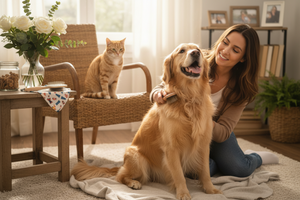
There's a moment every pet owner knows — your dog rests their chin on your knee, your cat curls into the crook of your arm, your rabbit twitches their nose at you from across the room — and you think: I want to give you the very best.
That feeling is exactly why we do what we do. And it's why we've put together these updated care tips, drawing from the latest in veterinary guidance and the wisdom of experienced pet parents. Because the love is already there. These tips are just the how.
Feed the Whole Animal, Not Just the Hunger
Nutrition science for pets has come a long way. We now know that what your pet eats doesn't just fuel their body — it shapes their mood, their coat, their energy, and their long-term health.
A few things worth knowing right now:
For dogs: Look for foods where a named protein (chicken, salmon, beef) is the first ingredient. Avoid fillers like corn syrup or artificial preservatives. And don't overlook life-stage feeding — a senior dog has very different needs than a bouncy six-month-old pup. (Dog's Collection)
For cats: Cats are obligate carnivores, which means they genuinely need animal protein to thrive. Wet food is often underrated — it helps keep them hydrated and tends to be closer to their natural diet than dry kibble alone. If your cat (Cat's Collection) is a picky eater, try gently warming their food to release the aroma.
For small animals (rabbits, guinea pigs, hamsters): Fresh hay should make up the majority of their diet — it keeps their digestive systems healthy and their teeth worn down naturally. Pellets are a supplement, not the main event. (Small Pets)
When in doubt, your vet is your best resource for personalised feeding advice. We're also always happy to help you read a label.
Hydration: The Quiet Hero of Pet Health
Most pet owners think carefully about food, but water often gets overlooked. Yet hydration is quietly one of the most important factors in your pet's wellbeing.
Change your pet's water daily — even if the bowl looks clean. Stale water can harbour bacteria, and many animals will simply drink less if the water doesn't smell fresh.
Consider a pet water fountain, especially for cats. Many cats are instinctively drawn to moving water (a throwback to their wild ancestors avoiding stagnant sources), and a fountain can encourage them to drink significantly more.
For birds and reptiles, check species-specific guidance — their hydration needs can vary enormously.
Enrichment: Caring for the Mind, Not Just the Body
A fed pet is a healthy pet. But a stimulated pet is a happy pet.
Mental enrichment is increasingly recognised as essential, not optional. Boredom in pets can lead to anxiety, destructive behaviour, and even physical illness.
Try these simple ideas:
- Puzzle feeders for dogs and cats turn mealtime into a game. They slow down fast eaters and engage your pet's problem-solving instincts.
- Rotation toys — instead of leaving all toys out at once, rotate a selection every few days so things feel new and interesting.
- Scent walks for dogs — let them stop and sniff. A slow, exploratory walk does more for a dog's mental health than a brisk march around the block.
- Foraging setups for small animals — hide treats in hay or shredded paper so they can root around and discover them.
The goal isn't to entertain your pet constantly — it's to give them opportunities to engage their natural instincts in a safe, joyful way.
Preventive Care: The Kindest Investment You'll Make
Routine vet visits can feel like an expense, especially when your pet seems perfectly fine. But preventive care consistently saves money — and heartache — in the long run.
Keep up with:
- Annual wellness exams (or every six months for senior pets)
- Parasite prevention — fleas, ticks, and heartworm are far easier to prevent than treat
- Dental health — dental disease is one of the most common (and most preventable) health issues in cats and dogs. Ask your vet about home dental care options.
- Vaccinations — keeping these current protects not just your pet, but other animals they interact with
If you notice anything different — a change in appetite, energy, coat condition, litter box habits, or behaviour — trust your instincts and call your vet. You know your pet better than anyone.
Rest, Routine, and Feeling Safe
Rest, Routine, and Feeling Safe
Finally, one of the most overlooked aspects of pet care: your animal needs to feel safe.
A consistent routine — regular feeding times, predictable walks, a quiet place to retreat — gives pets a sense of security that deeply affects their wellbeing. This is especially true during changes like moving house, a new baby, or another pet joining the family.
Make sure every pet has a space that's truly their own. A cosy bed tucked in a quiet corner. A cat tree where they can observe from above. A burrow for a small animal. Somewhere that belongs to them, where they can rest without being disturbed.
And when they're comfortable, cared for, and surrounded by love — give them the little things that make their space feel like home.
Explore our collection of pet essentials designed to bring more comfort, joy, and care into their everyday moments.
Give your pets the comfort they deserve — shop their new favourites today.